The Emperor's Post Modern clothes
Contemporary art, the CIA and why everything is ugly

The broad concept of ‘modern art’ is a fast flowing timeline that began in the mid 1800s in Europe with the Impressionism of Monet and Degas and evolved into post-modern art by the 1980s finding new territory in America. The timeline includes a great diversity of ideas including Symbolism, Art Nouveau, Fauvism, Expressionism, Cubism, Dadaism, Surrealism, Abstract Expressionism and Pop art. Many of these movements have a lot to offer despite being the embryo of an ideology that I believe has brought an end to the idea of art movements, to paraphrase Stephen Hicks: art is stuck.
The central principle of post-modern art is deconstruction, which is why nothing can be born of it, the endless installations and performance art can be summarised as ‘flogging a dead horse’, which in some instances is an ironically apt description. As with post-modern philosophy, post-modern art is difficult to define due to a lack of particular characteristics, but this is intentional.
Not all art that is considered ‘modern’ is automatically responsible for cultural decline, there is nothing inherently wrong with a more diverse scope of methods and subject material such as the beautiful architecture and interior design in the Art Nouveau style or the symbolism of Gustav Moreau and the surrealism of Dali, these are expressions of human talent that have value and speak to us of our shared experience. However, there comes a point where it is not just a matter of taste but an active assault on beauty, and therefore also, truth.
Contemporary art is a visual representation of the same ideology that has infiltrated all of the humanities, it cannot create but survives on confusion and inversion and simply recycles the same theme; then the art world feigns intellectualism to defend against justifiable mockery.
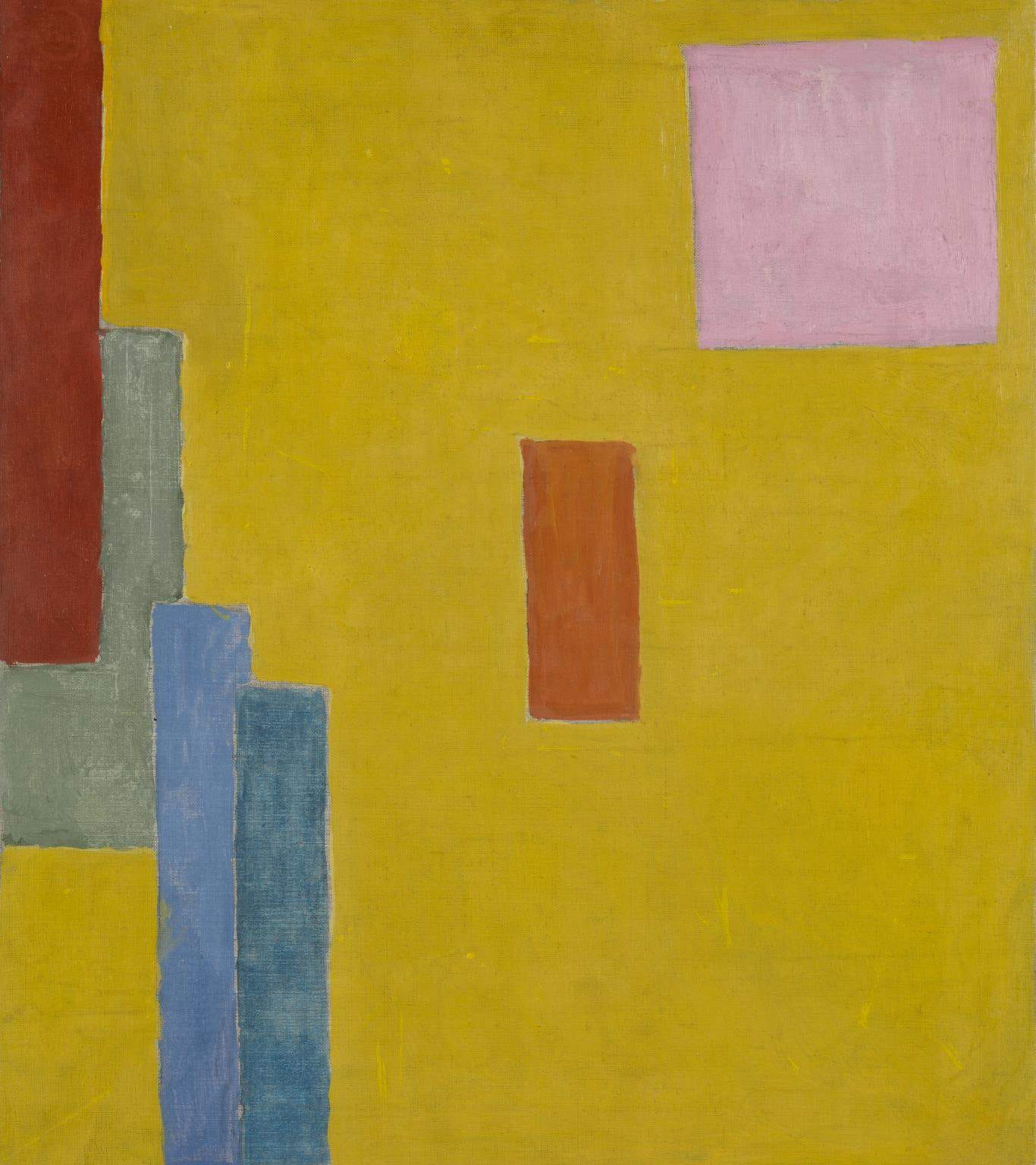
Vanessa Bell painted ‘Abstract painting’ in 1914 and called it a colour ‘Test for Chrome yellow’. The Tate Research Publication analysis read like a template for an essay about a piece of art, in that nothing was actually said, here is a direct quotation:
“...it does pose the question of how a part might relate to the whole without being subsumed into it; of how a pink square speaks to a maroon oblong across an expanse of yellow, and how all these shapes and colours adapt to the exchange. The painting is, fundamentally, a study in relationships, and the ways in which meaning is generated through differentiation.” – Grace Brockington
This reminds me of the Heider-Simmel experiment (1944) whereby a study was conducted to demonstrate how people attribute human emotions and infer narratives where there were none intended or inferred. This was done using a simple animation of three geometric shapes moving in and out of a box.
The analysis of ‘Abstract Painting’ doesn’t suggest what the relationship between the pink square and yellow expanse is exactly, but it does go on to say that the artist and her peers rejected ‘prescriptive structures of thought’ and hence we see how the fruit of this negation became outright nihilism in the post-modern era (which we are still in).
So how did we get here? Marcel Duchamp presented his urinal (titled ‘fountain’) in 1917 in New York and set a precedent within modern-art which is yet to be abandoned. The art world seemed to put down religion and mythology and pick up politics as their muse. The 20th century was punctuated with war, revolution and industrialisation and the literature and art seemed to imbibe this hopelessness and crisis of faith which anchored itself on the philosophies and ideas of Nietzsche, Marx and Freud. The portrait of humanity had seemingly revealed itself to be a hideous consuming and murderous beast, and the artists and writers were understandably reflecting this. The nihilism is introduced when this is recognised and then encouraged, the more raw and stripped back and supposedly candid the art the more it seems to be valued by the art world, the artist themselves having become the point of interest.
“I continue to get further away from the usual painter’s tools such as easel, palette, brushes, etc. I prefer sticks, trowels, knives…” - Jackson Pollock (1947)
As the art world became more political in the early 20th century, it’s no surprise that a shadow began to move in and start pulling strings.
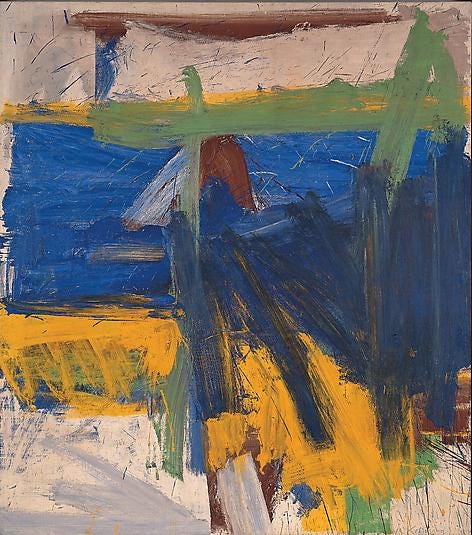
It is now considered a fact that the CIA orchestrated the rise of Abstract Expressionism in America through names such as Jackson Pollock and Willem de Kooning, who were both employed by the Federal Art Project. The Independent Newspaper reported that this ‘long leash’ approach to shepherding the “anarchic” modern artists was one of many propaganda initiatives in response to the Cold War whereby it could apparently combat sympathy for communism, this was possibly an element of what is known as ‘Operation Mockingbird’; Nelson Rockefeller’s Museum of Modern Art played a huge role in this game of cultural chess, curating sophisticated exhibitions and showing the world (with CIA funding) that America was a hub of contemporary culture. This initiative influenced hundreds of publications and pushed trends toward a self indulgent bohemianism.
One example of this is the CIA and MI6 funded magazine ‘Encounter’, which was a British-American intellectual journal with many big name contributors (who I am sure were most likely totally unaware of the CIA involvement). The idea was apparently to steer the liberal Left wing away from Stalinist sympathies, the modern parlance is that these plots are “controlled opposition”.
Another neat little element here for the wealthy to exploit is that modern artwork has subjective value, making it very useful for heavily inflating or deflating price and in our heart of hearts people care less about it than a Michelangelo or Rubens and have less ability to judge its worth based on anything but social trends.
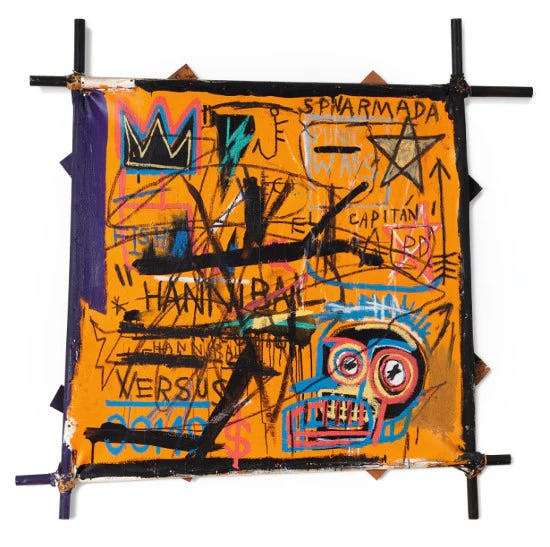
Sacred and traditional art has a scholarly history and objective value through experts and institutions (such as the Church) who have a genuine interest in conserving cultural heritage. Private sales, anonymous bidding, cash exchange through multiple hands in different countries (through the use of Freeports) make money clean and receipts difficult to clarify. In 2006 David Geffen sold a De Kooning painting for $137.5 million to a hedge fund manager and then in 2015 he sold another De Kooning for $300 million to another hedge fund manager. All above board I’m sure, however it shows how it could be the perfect scenario, should you be so inclined, to move exorbitant sums of money with almost no discernible investigation. For example, Jean-Michel Basquiat’s ‘Hannibal’ was seized in the US along with another $20 million worth of paintings belonging to a Brazilian art collector and convicted money launderer, the Basquiat was apparently smuggled into America disguised as a $100 dollar painting, perhaps a much more adequate estimate.
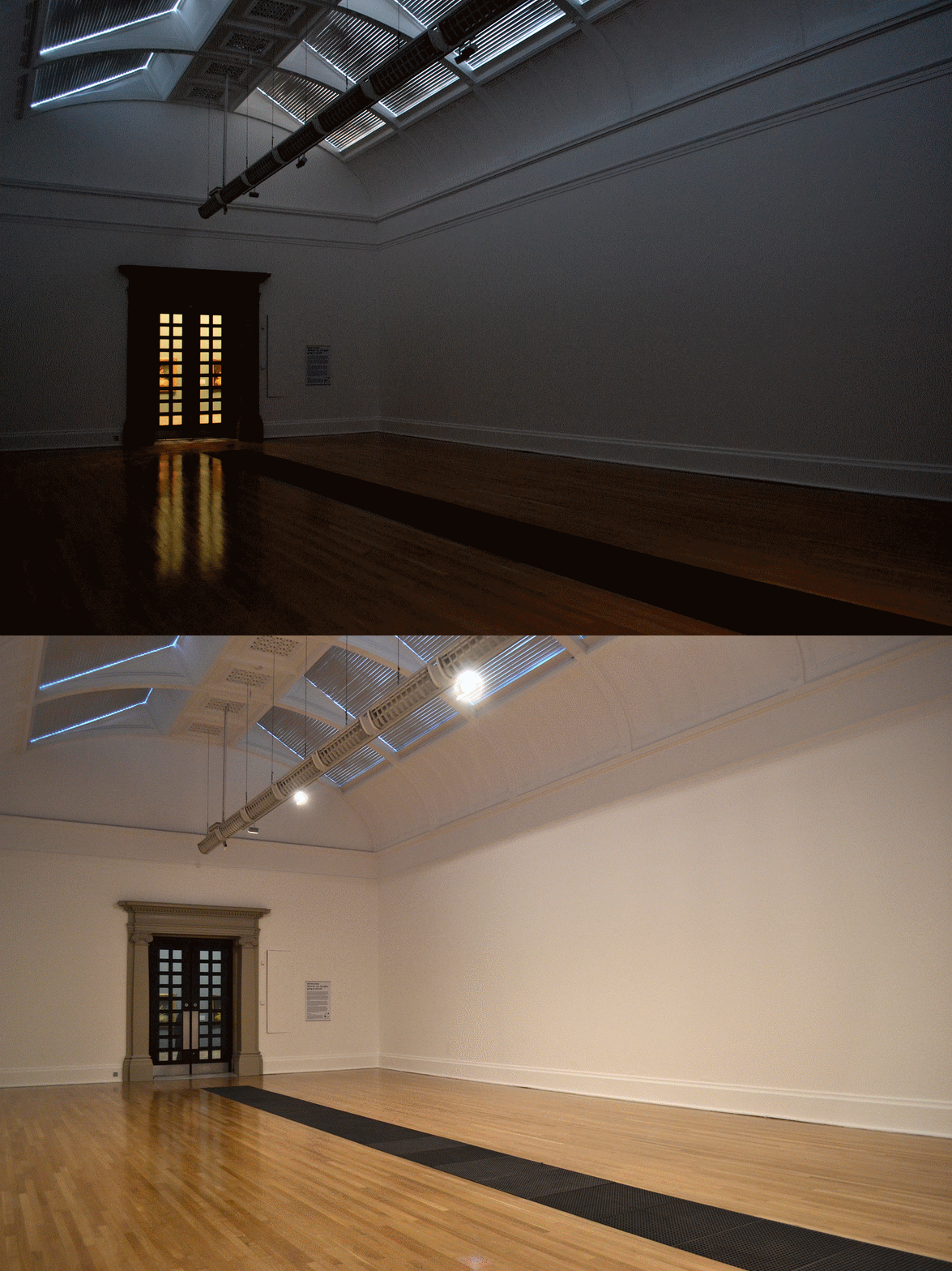
The relevance of the influence of Intelligence Agencies on cultural movements lends an insight into why and how we have got to where we are in the art world, the main purpose of these agencies is to control what we believe and manage ideological trends and as art movements illustrate the psyche of an era, to all intents and purposes we have ended up believing in whatever Martin Creed meant by “Work No.227: The Lights Going On and Off (2000)” or what Vito Acconci meant by the performance “Seedbed (1972)” or perhaps what Ai Weiwei meant by “Dropping a Han Dynasty Urn (1995)”. If they meant anything at all, what are we as the viewer supposed to take away from the conversation?
Returning to Jackson Pollock, who eventually stopped giving his paintings titles and instead numbered them so as to not give the viewer a preconceived idea about the meaning of the painting, I think we can determine that the overall ideology is one of meaninglessness, and where there is still somewhere that has clung to the silly notion of purpose and truth, the artist can rise from the slumber of plastic shapes and choreographed trash and attack with a peculiarly unique disgust and bile.
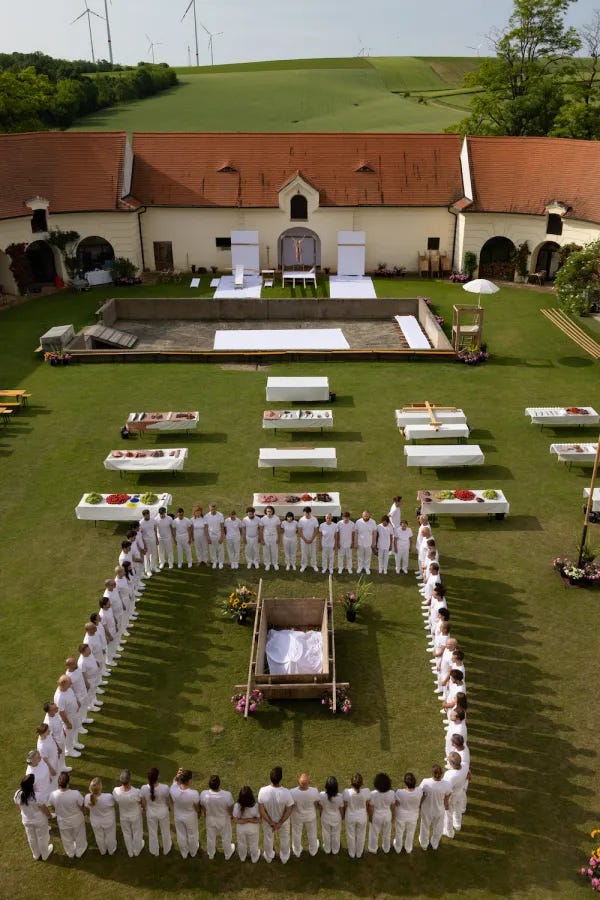
A perfect example of this is in the performance by Hermann Nitsch titled “The Orgies Mysteries Theatre (1962)” which is a sort of recurring violent ritual festival, mockery of Christ and Dionysian/ Bataillian orgy with bloody animal carcasses and naked participants, most recently held in a former monastery. Nitsch had been charged under obscenity and indecency laws, but his ritual violence is not an anomaly in the post-modern art world (Marina Abramovic apparently attended one of these events). Additionally, the work of artists who destroy classic works, such as Jake and Dinos Chapman who defaced rare prints by Goya as part of an installation. Their artwork centres largely on themes of Nazi imagery and war, mutilated mannequins, consumerist iconography and obviously, pornographic, sacrilegious accelerationism. This spite and mockery is a response to being morally convicted by beauty. The slippery slope of rejecting traditional methods of art and questioning “structures of thought” to performance art centred on violent, perverted acts of depravity was extremely fast because at the heart of it is a rejection of God, and embracing of Hell as the utter absence of God. This lends an explanation as to why sacrilege and paganism seeps into the modern artist’s work and why the slow erasure of beauty in our art, architecture, décor, fashion etc. is a spiritual death by a thousand cuts.
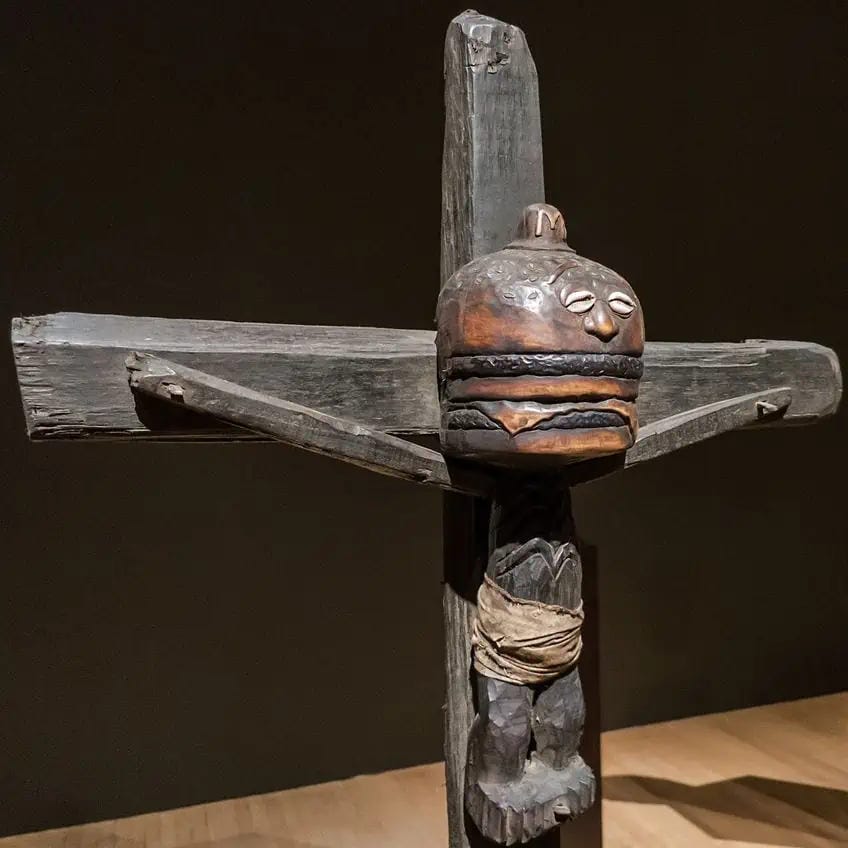
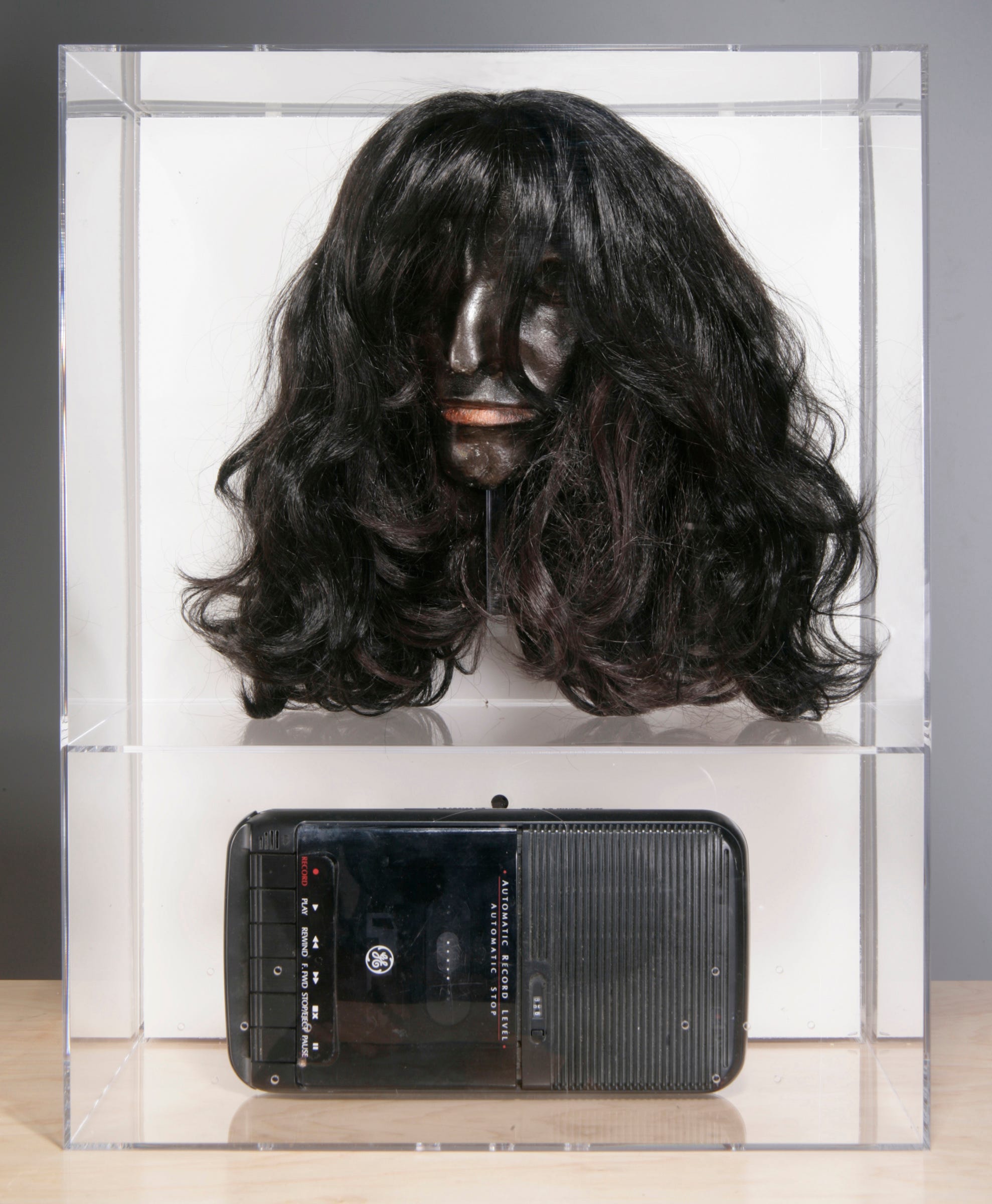
A popular theme among so-called ‘anti-formalist’ artists of the 20th century was to create wax models of themselves as a sort of effigy or golem, such as with the work of Lynn Herschman and Paul Thek. The installations are often social commentary with queasy details such as signs of rot or indications of abuse, combined with the durability of wax or vinyl gives the impression of an embalming. There is a voyeuristic element where viewers are very much included in the lives of these cadavers, Herschman even existed interchangeably with her models for the duration of the act, such as with one effigy named ‘Roberta’. This almost intuitive act of creating uncanny effigies to signify societal corruption seems to illustrate the death of art rather aptly. Moreover, it indicates the self as the centre of it all. These artists believed that their work was anathema to the established structures and yet it now dominates the art schools and the humanities as a whole.
The “art” illustrates the post modern philosophy of the likes of Deleuze, Guattari, Bataille, Foucault, Baudrillard etc. but like the animation experiment, one is left attempting to find a narrative in chaos’ to see a pattern where this is none, in essence, to join the philosopher/artist in embracing an artificially imposed schizophrenia.
Whether consciously or not, these exhibitions are like magical acts of possession; Herschman’s alter-ego that lived with her in ‘Dante’s Hotel’ (the title speaks for itself) was apparently not keen to let go of her life, and in 2006 Stanford Humanities Lab reconstructed the Dante Hotel in a virtual world where avatars could explore it. Herschman worked with technology to create more digital golems, bringing the mess of apparently debilitating human existence into the clean realms of cyberspace, where primitive idolatry can blossom in the rise of transhumanism.
I want to make it abundantly clear, the degradation we see today in the art world and subsequently all around us in everyday life is not an accident. Social commentary and ironic self depreciation became our summon bonum instead of the ennobling stories of Greek myth or the Bible. We are made to believe that it is down to taste or that we wouldn’t understand, when it is in a gallery; but when the cultural trickle down results in cities that lack harmony with no distinguishable heritage and no decoration, clothing that is beige and shapeless and the beauty of everyday items deemed an excess that is of no use when you’re only looking at screens, we see it is actually indicative of the aforementioned crisis of Faith, which orders our shared values and aims them upwards. Furthermore, Faith informs our understanding of human dignity and our sense of identity within the family and the broader community. I firmly believe that if as a society, we return to Beauty, then Truth and Goodness will follow.
aReally solid breakdown of the CIA-AbEx connection. What caught me was the Freeport angle and how subjective valuaton enables the whole thing. I worked briefly in an auction house and saw how easy it is to inflate prices through strategicbidding, especially when works have no objective criteria for value. The fact that Geffen moved two De Koonings for a combined $437M to hedge fund managers reads less like patronage and more like structured transfers with plausible deniability. The art world basically built an unregulated financial instrument masked as culture, and intelligenec agencies weaponized it twice: first for ideological control, then as a parallel banking system. We're supposed to beleive this happened organically?