Cloistered Faeries
A brief look at Monks and Hermits in Fairy stories and Literature

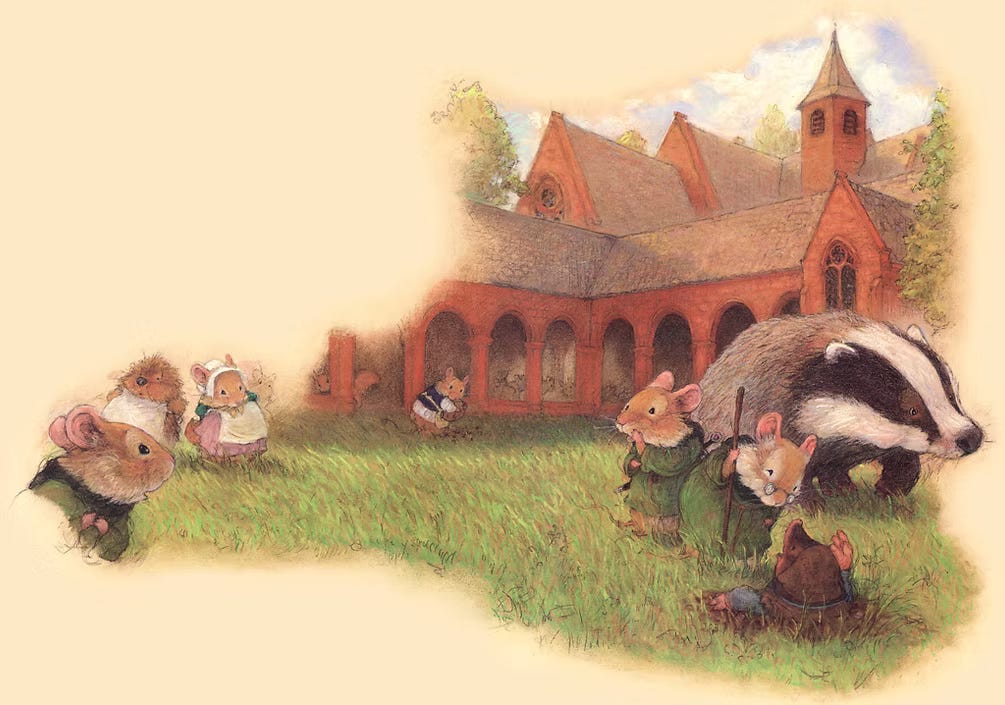
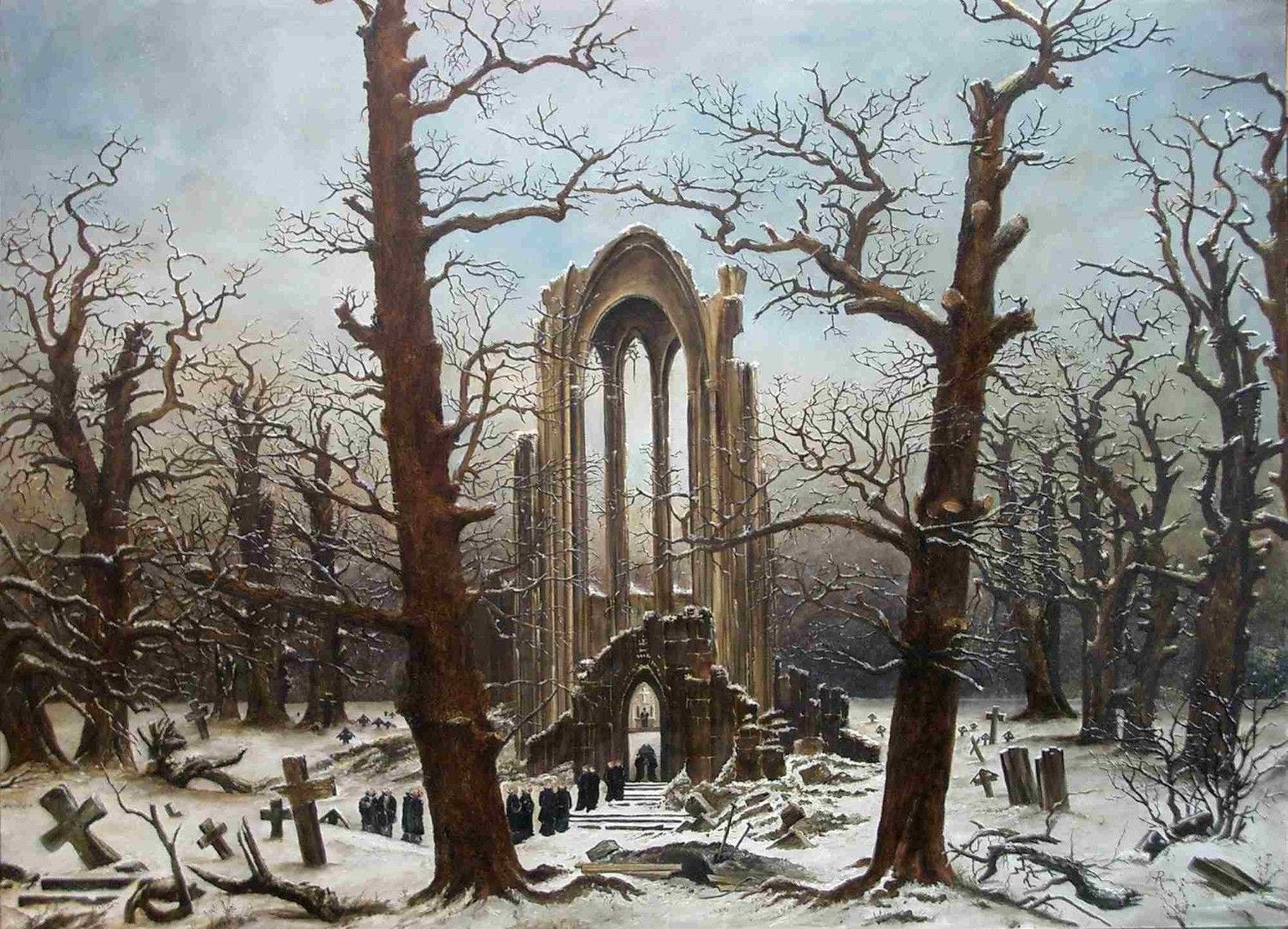
I spend a lot of time in and around Pluscarden Abbey here in Moray, I have interviewed two of the monks there as well as the Bishop who was previously abbot. Recently, I had been reading Redwall by Brian Jacques to my son who has had a hearty diet of Robin Hood, King Arthur and The Chronicles of Narnia and probably doesn’t realise that Benedictine monks don’t necessarily have a big role in most people’s lives (regrettably) – I realised that there is this mythical quality to the monks and the abbey, perhaps as a ‘wise man’ archetype within classic literature and fairy story but I want to explore the idea some more.
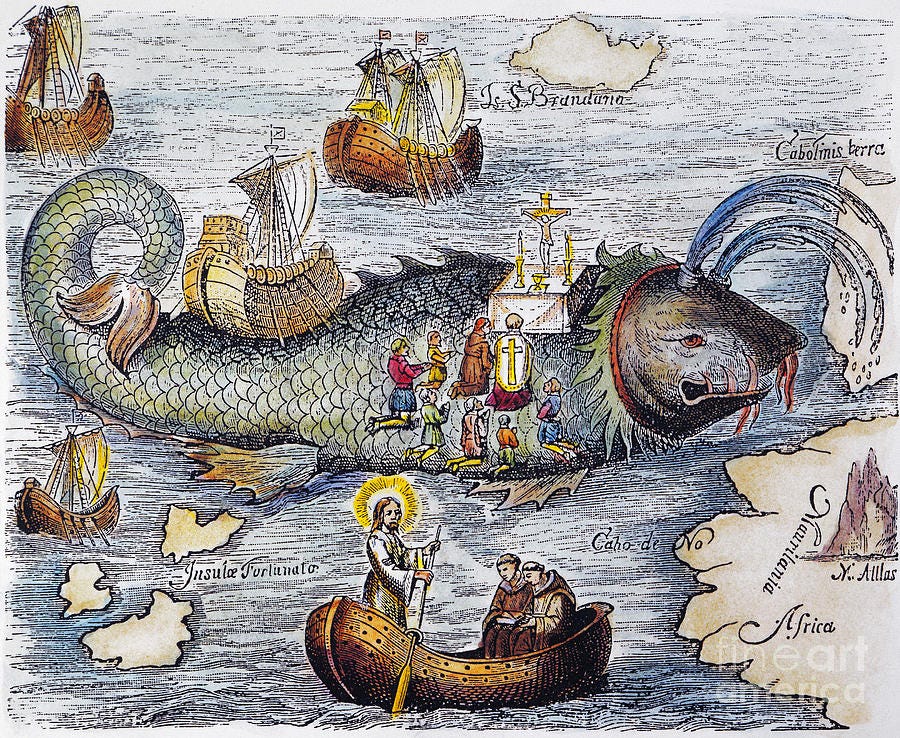
When looking for monks and priests in fairytales, I found a few examples in Irish anthologies, one about a monk who followed a bird out of the monastery gardens lured by it’s beautiful song, only to return to the monastery to see it drastically changed, since 200 years had passed; and some where fairies were enquiring with a priest as to whether they were saved or not. Similar themes show up in the stories of the early Saints, such as St Columba defeating the Loch Ness monster and St Brendan performing Mass on the back of a sea monster. These tales seem to highlight the submission of the wilds to the order of the Gospel and the conversion of pagan people. Many early missionaries are said to have lived in caves, such as St Kevin in Ireland and St Govan in Wales, over time monasteries and abbeys sprung up and became centres of learning; many of the early annals and chronicles were written by monks, such as ‘An Ecclesiastical History of the English People’ by Venerable Bede and the legendary Book of Kells which seemed to have a life of its own.
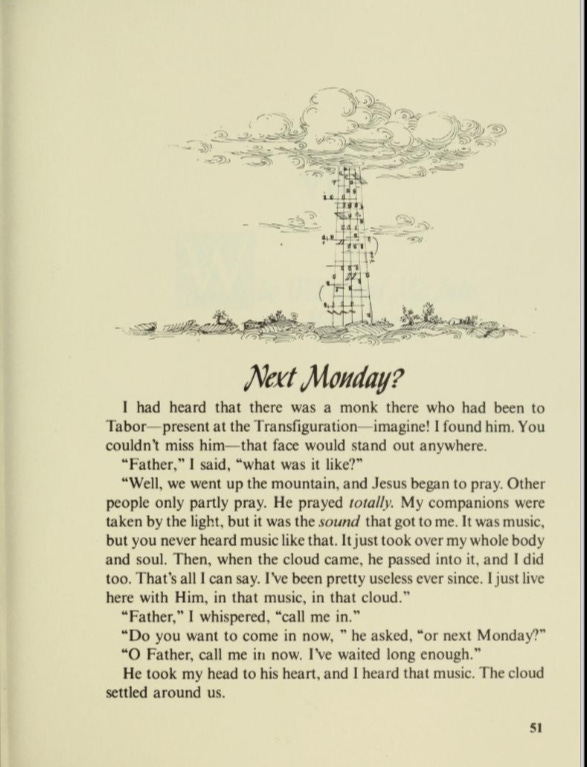
On my search I also found ‘Tales of the Magic Monastery’ by Theophane the Monk published in the 1980’s, which is a book of short whimsical and wise tales. The two stories that stood out to me as in keeping with this idea of the monk’s malleable interplay with time are about monks who had witnessed the Birth of Christ as well as the Transfiguration, both almost casually recall the scenes and mention the music they heard, which is something that I also associate with the abbey as the monks seem to be in perpetual song.
In the stories of King Arthur and the Holy Grail we find many mentions of hermits and monasteries, the hermit is usually a spiritual guide chanced upon by a character on a quest, they often seem to be guardians of either knowledge or a mystical object and also may assist in healing and the redemption of a character, both Lancelot and Guinevere end their days within the monastic setting. As with the allusion to the omnipresent monk in the ‘Tales of the Magic Monastery’, we see this unity with the very fabric of nature, even time itself. Abbeys and Hermit’s caves are often set outside of the city, nestled in the wild spaces. What really illustrates this is the continuity of the monastic orders into the modern era, they represent this bridge between myth and history whereby monks and priests were often vehicles for the story; King Arthur himself being part historical, part myth.
In JRR Tolkien’s essay ‘On Fairy Stories’ he discusses how ‘fundamental things’ are made ‘luminous’ through the fairytale, in other words looking at the mundane sideways, such as how in Lord of the Rings, the very familiar forest wakes up to help in the battle against Sauron. With the fairy monastery or the monk who goes to fairyland then, we have a familiar setting, since as we have discussed, the ‘wise man’ archetype of the monk and his abbey has been consistent in Western literature, yet that is now seen from a different dimension, the strangeness of reality itself is arrested and becomes a looking glass into ‘Faerie’, the grounded becomes mystical, because it always has been. Fantasy is not really an escape from reality but invigorates reality. Tolkien also says that the desire to speak with animals and not feel separated from them (and by extension nature itself) is the result of a guilt that has stayed with us since the Fall.
Tolkien begrudged the analysis of fairy stories as contradictory to their essence (it’s like cutting open the Mexican jumping bean), but I think what we can re-learn from them is firstly, that they aren’t a closed project and also that we are sorely missing the spiritual guide and keeper of wisdom in the stories we read, and perhaps also in our own lives. The Classic children’s literature that I mentioned at the start, are classics for their timeless structures, the hero’s quest with it’s departure/initiation/return order as reflections of the ultimate story, the Gospel. However, the hero cannot complete his task without the full cast.
Fairy stories and folk tales are different in that they’re like smaller parts of a larger plot. As is the tradition with fairy stories, they had often been told and re-told many times before they were finally recorded on paper, altering slightly upon each remembrance. So, picking up different elements of a fairy tales, Saint’s stories and my own experience, I have written a fairy story in the jejune way in which they’re often relayed.
--
The Fairy Monastery
There was a young man named Adrian who travelled North to find peace at a monastery in the forests of Moray in Scotland, he was unwell and had never felt like he was on the right path in life. He spent several weeks with the monks there discerning whether he should join the brothers, he would pray and eat with them, tend to the bees and study Latin. On a Sunday they would have some time to themselves, so the young novice went out walking after Mass in the forest of pine, he walked through the graveyard where many monks before him were laid to rest, through the old gate at the edge of the field and along the paths eating bilberries as he went. He came to a black burn that looked the colour of whisky, he sat at the edge of the stream for a long time when suddenly he heard his brothers singing prayers at None, jumping up believing he had been gone far too long, he realised that he couldn’t possibly hear his brothers singing as he was at least 2 miles from the abbey. He followed the sound until he hopped across a narrow part of the stream to a small island and found himself at the door of a hidden monastery, believing he must have lost his wits and had actually found his way back to the abbey in a daze, he ran into the chapel to join the end of prayers, only the monks looked ever so slightly odd, and they didn’t seem to recognise him despite his robes matching their own. As he joined their ranks, he could see that their features were slightly pointed, their eyes narrow and their skin a bluish hue. When prayers had ended, the brothers greeted Adrian as a guest and invited him to dinner.
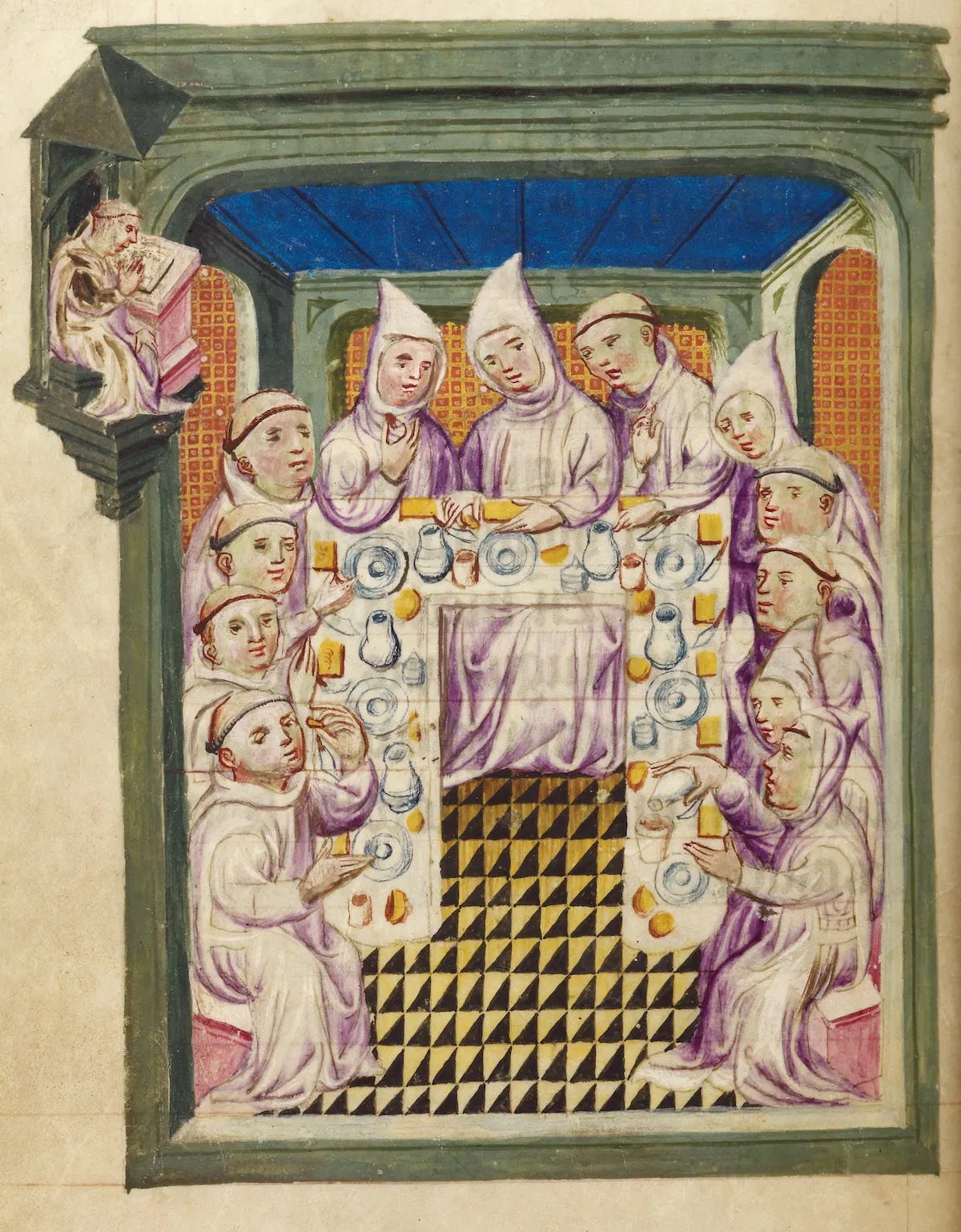
The strange brothers at once understood why Adrian had come and he was introduced to the last human monk who had burst through their doors late for prayers, Father Magnus was an exceedingly aged monk but seemed full of life. He explained that the other brothers are faeries and had been here since St Brendan converted them many years ago. Adrian and Fr Magnus spent years they lost track of with the faerie brothers, they did their chores and prayers in much the same way as before.
One day at the beginning of Advent, Adrian and Fr Magnus knew they had outstayed their welcome, they asked the brothers if they could return to their own abbey. The faerie brothers were sad to see them leave, but helped them return to the other side of the Burn. The brothers walked slowly back through the forest together, it was much colder and darker than when they last walked this way. They reached the abbey just in time for Vespers. They pushed the heavy door open, crossed themselves at the holy water stoop and approached the alter to kneel. As they turned, they met the gaze of several of the brothers before scattering like incense.
Beautiful article Thankyou 🙏🏻 Have you read The fairy-faith in Celtic countries
by Walter Evans-Wentz? It has quite a lot of interesting stuff in it regarding fairies and Christianity.